

Residential + commercial energy storage
Flexible battery storage. Designed around the way your site uses energy.
Dyness manufactures lithium iron phosphate battery systems spanning compact home storage, modular stacks and commercial cabinets. Moebotics Energy assesses the load, tariff, site, backup objective and exact equipment interfaces before recommending a configuration.
Moebotics Energy selects Dyness equipment as part of a complete assessment covering energy use, compatibility, installation and the required operating outcome.

Manufacturer profile
Energy storage is the core business.
Founded in 2017, Dyness focuses on residential and commercial battery-storage systems, with products ranging from compact home batteries to large commercial cabinets.
Dyness reports more than one million systems shipped, over 240 patents and three research centres. Learn more about Dyness Australia .
Product forms at a glance
See the hardware before comparing the specification.
Compare three common formats: compact wall-mounted batteries, modular stacks and commercial cabinets. We confirm the model, quantity and siting for each project.

PowerBox G2
A compact wall-mounted battery for residential storage.
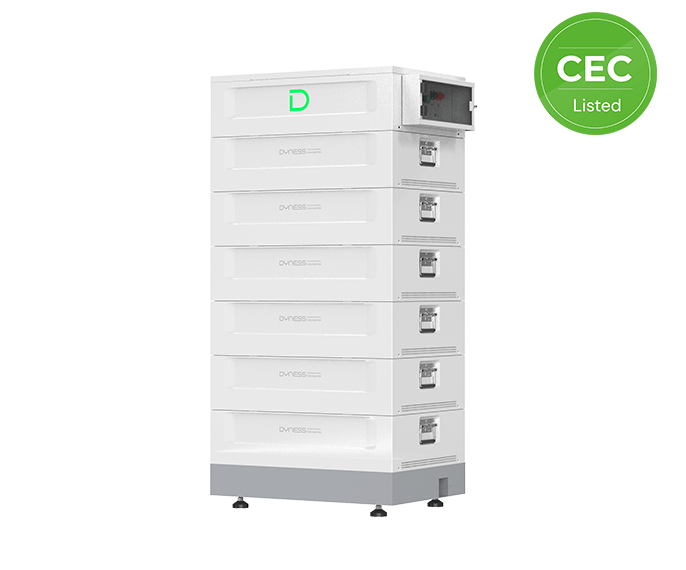
STACK100 Pro
A modular stack that can scale with the site’s storage requirement.

DH100F
A cabinet-format storage option for commercial applications.
Current Australian catalogue
Different architectures for different energy profiles.
The Australian range spans residential batteries, an all-in-one home system, modular stacked storage and commercial cabinets. Moebotics Energy confirms current local availability and exact model identifiers when preparing each proposal.
Residential range
Storage that can start at home scale and grow with the load.
The best-fit battery brings capacity, voltage architecture, inverter compatibility, usable energy, output, phase arrangement, siting and backup design together in one coordinated system.
Low-voltage battery
PowerBox G2
A slim 10.24 kWh nominal LFP battery for residential storage, with wall-mounted or floor-standing installation options.
- 10.24 kWh nominal energy per unit
- IP66 manufacturer-specified enclosure rating
- 1C manufacturer-rated charge/discharge capability
- Up to 50 units in parallel within a supported system design
Low-voltage battery
PowerBox Pro
A 10.24 kWh nominal LFP unit designed for household storage, with wall or floor mounting and modular parallel expansion.
- 10.24 kWh nominal energy per unit
- IP65 manufacturer-specified enclosure rating
- ≥6,000 cycle-life specification
- Up to 50 units in parallel within a supported system design
High-voltage modular storage
STACK100 Pro
A rackless, stackable system listed by Dyness for residential and small commercial applications, using 5.12 kWh LFP modules.
- 15.36–76.8 kWh system energy per cluster
- Up to 12 clusters in parallel
- IP66 + 1C manufacturer-rated capability
- ≥8,000 cycle-life specification
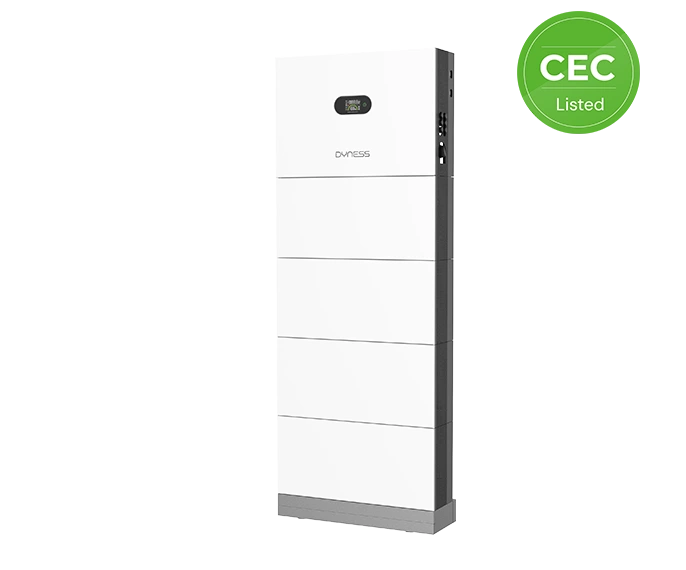
All-in-one residential system
Cygni
An integrated 8 kW or 10 kW platform offered in hybrid and AC-coupled variants for new systems or suitable retrofit pathways.
- 7.68–46.08 kWh usable energy
- 8 kW / 10 kW output classes
- Hybrid + AC variants listed by Dyness
- IP66 and manufacturer-described VPP readiness
PowerBox G2 provides 10.24 kWh nominal energy per unit and supports larger parallel configurations. Moebotics Energy confirms the BMS topology, inverter compatibility and supported capacity for each project.
Commercial + industrial range
Modular stacks and cabinet systems for more complex loads.
Moebotics Energy integrates commercial storage with the whole site electrical system, aligning demand profile, power rating, duration, connection, protection, fire engineering, cooling, controls and operating objectives.
Modular stack
STACK100 Pro
15.36–76.8 kWh per clusterNatural-convection modular storage with up to 12 parallel clusters and manufacturer-rated 1C capability.
View official page Modular stack
STACK100
15.36–76.8 kWh per cluster51.2 V / 100 Ah LFP modules, with up to 12 clusters and a maximum system capacity of 921.6 kWh.
View official page
Air-cooled all-in-one
DH100F
71 / 86 / 100 kWhIP55 cabinet options for large homes and small C&I applications, with scheduled operation, peak-shaving and solar self-consumption functions described by Dyness.
View official pageDH200Y
232 kWh to approximately 2.3 MWhA 1,000 V LFP cabinet supporting up to 10 units. The cabinet is rated IP55, while the battery packs and PCS are rated IP65.
View official pageBF100
Air-cooled, expandable storageBF100 is available in several capacity configurations. Moebotics Energy confirms the locally available model and matches it to the project.
View official pageBF200
280 Ah LFP · IP55Dyness describes BF200 as a DC battery cabinet designed to pair with a compatible external hybrid inverter for AC integration.
View official pageCapacity architecture
From one home to multi-cabinet storage.
These values show how the Australian product families scale. Each figure is presented at its relevant level—per unit, cluster or cabinet—so the architecture is easy to understand.
Cygni
7.68–46.08 kWhUsable system energyPowerBox G2
10.24 kWhNominal per unit; parallel capableSTACK100 / Pro
15.36–76.8 kWhSystem energy per clusterDH100F
71 / 86 / 100 kWhCabinet configurationsBF200
215 kWhPairs with a compatible external inverterDH200Y
232 kWh → 2.3 MWhOne cabinet to ten unitsMoebotics Energy converts rated capacity into a project-specific usable-energy and power design using the selected model, depth of discharge, inverter or PCS, operating profile, temperature and commissioned control strategy.

Natural-convection cooling
STACK100 Pro uses natural-convection cooling. Moebotics Energy incorporates current operating limits, clearances and installation instructions into the site design.

Stacked modules + control layer
The modular construction allows capacity to be built around the site requirement while keeping the system compact.


Capacity changes the installed form
Six- and eight-module examples show how stack height changes. Moebotics Energy confirms module count, dimensions, weight, handling and structural requirements for the selected model.
What storage can help achieve
Start with the operating objective, then select the right battery.
A well-designed system can address several objectives at once. Moebotics Energy tests each opportunity against actual energy data, tariffs, site conditions and selected equipment.
Use more onsite solar
Store suitable daytime surplus for later consumption and make better use of available solar generation.
Shift energy by time
Test charging and discharge windows against the customer’s tariff and load profile.
Manage demand peaks
Model whether power, energy duration and controls can address the events setting demand costs.
Support critical loads
Engineer a compatible EPS or backup pathway around defined loads, starting currents and required duration.
Prepare for growth
Allow for EV charging, electrification, new equipment or operating-hour changes before sizing the system.
Stage future capacity
Plan modular expansion around manufacturer-supported BMS, inverter and system architecture.
Connected energy intelligence
Dyness monitoring brings system performance into view.
For compatible equipment, the Dyness cloud platform and app can provide live system information, performance history, supported operating strategies, remote access through Wi-Fi or 4G and Bluetooth-based local setup.
Explore the official Dyness monitoring platform01Operating statusAvailable live battery and system indicators
02Historical dataTrends and evidence for supported analysis
03Supported controlAvailable time, tariff and operating strategies
04Local commissioningBluetooth setup where product support permits
Available functions are configured around the selected product, communications hardware, compatible inverter or PCS, firmware, account permissions and network connection. Moebotics Energy aligns its monitoring and review service with the agreed system and service scope.
The Moebotics Energy method
Hardware becomes useful when the whole system fits.
We combine your energy data with equipment selection, installation and ongoing support so the battery works as part of the whole site.
Understand
We look at bills, interval data, tariffs, operating hours, existing equipment, critical loads and future plans.
This gives us a clear starting point.Optimise
We compare practical solar, battery, tariff and operating options using agreed assumptions.
You can see the trade-offs before choosing.Install
We match the battery, inverter or PCS, controls and communications, then coordinate design, approvals, installation, commissioning and handover.
You receive a commissioned system and clear handover.Monitor
If monitoring is included, we track available performance data and investigate unusual results.
Problems and opportunities are easier to see.Manage
As loads, tariffs or priorities change, we can recommend and document agreed adjustments.
The system can keep pace with the site.Support and warranty
Know what support and warranty apply before you commit.
Every Moebotics Energy proposal identifies the selected Dyness product, its applicable manufacturer warranty and the support process for the system.
Local manufacturer support
Dyness has an Australian sales and service presence in Melbourne. For systems we supply, Moebotics Energy helps coordinate enquiries with the appropriate Dyness support team.
Up to 10 years on selected products
Selected Dyness products include a manufacturer warranty of up to 10 years. Your proposal will clearly state the coverage that applies to the recommended product.
Support for future changes
We can assist with product registration and document the installed system. Before adding storage later, we confirm product compatibility and any Dyness approval requirements.
Dyness support: warranty registration · after-sales support .
Warranty coverage is provided by Dyness and depends on the selected product, registration, installation and current manufacturer terms.
Common questions
Clear answers for a confident storage decision.
Each recommendation combines site data with current technical information for the selected model, making the pathway from assessment to installation clear.
Which Dyness battery is right for my home or business?
Moebotics Energy aligns usable load data, tariff, solar surplus, desired power and duration, voltage architecture, phases, inverter or PCS compatibility, installation location, network conditions and operating strategy before recommending a model.
How is blackout support included in a Dyness system?
Backup capability is engineered around a compatible inverter or PCS, an EPS or backup architecture, appropriate switchboard work, defined essential loads, output and starting-current requirements, a commissioned changeover method and suitable usable stored energy.
Can I add more battery modules later?
Several Dyness families support modular or parallel expansion. Dyness provides an approval pathway that considers the existing serial number, proposed module, model generation, battery state, BMS topology, inverter support, cabling, protection design and firmware so growth can be planned confidently.
How does Moebotics Energy confirm Australian approval and compatibility?
Dyness announced that STACK100 Pro joined the Clean Energy Council approved battery list in April 2026. For each project, Moebotics Energy confirms the current listing, exact model identifier, supported inverter combination and relevant installation requirements as part of the system design.
What does a 1C rating mean in practice?
A 1C rating indicates a manufacturer-rated charge or discharge rate relative to battery capacity under specified conditions. It represents strong power potential, while the designed operating rate is set by inverter or PCS power, available grid and solar energy, state of charge, temperature, current limits and control settings.
How is VPP readiness confirmed?
Moebotics Energy can assess the exact equipment, firmware, communications, retailer or aggregator program, location and customer eligibility to identify suitable VPP participation pathways.
Designed for confidence
Every recommendation is confirmed for the site.
Moebotics Energy checks current specifications, local availability, relevant approvals, compatibility, firmware and manufacturer guidance for the selected battery, inverter or PCS and communications architecture before quotation and installation.
Site-specific engineering coordinates battery siting, clearances, electrical protection, structural support, ventilation, access, fire considerations, network requirements, qualified installation and commissioning into one documented project pathway.
Expected savings, payback, emissions reductions and performance are modelled from verified customer data and clearly stated assumptions, giving customers a practical view of the opportunity before proceeding.
Find the right fit
Turn your energy data into the right Dyness storage solution.
Start with your bills, authorised interval data, existing equipment, site details and desired outcome. Moebotics Energy will compare suitable solar, storage, tariff and operating pathways and make the next step clear.